![The World's Most Dangerous Book [Part 3] by Alan Watts](https://images.squarespace-cdn.com/content/v1/5ff86e38dd4cdc650b26083e/1611241838169-4LYB5IQWY64HTV8OXA9X/Bible+5.jpg)
The World's Most Dangerous Book [Part 3] by Alan Watts
[Part 3]
Likewise, the Second Person of the Trinity, God the Son, the Logos-Sopia, refers to the basic pattern or design of the Universe, ever emerging from the inconceivable mystery or the Father as the galaxies shine out of space. This is how the great philosophers of the Church have thought about the imagery of the Bible and as it appears to a modern student of the history and psychology of world religions. Call it intellectual snobbery if you will, but although the books of the Bible might have been "plain words for plain people" in the days of Isaiah and Jesus, an uneducated and uninformed person who reads them today, and takes them as the literal Word of God, will become a blind and confused bigot.
PLEASE SUPPORT MARK WATTS PROJECT
![The World's Most Dangerous Book [Part 2] by Alan Watts](https://images.squarespace-cdn.com/content/v1/5ff86e38dd4cdc650b26083e/1611241878011-QZWPIKMQUTHQ2T1R8T5S/Bible+5.jpg)
The World's Most Dangerous Book [Part 2] by Alan Watts
[Part 2 of 3]
Such monarchs are, of course, frightened of their subjects and constantly on the anxious alert for rebellion. Is this an appropriate image for the inconceivable energy that underlies the universe? True, the altar-throne in Catholic churches is occupied by the image of God in the form of one crucified as a common thief, but he hangs there as our leader in subjection to the Almighty Father, King of the universe, propitiating Him for those who have broken His not always reasonable laws. And what of the curious resemblance between Protestant churches and courts of law? The minister and the judge wear the same black robe and "throw the book" at those assembled in pews and various kinds of boxes, and both ministers and judges have chairs of estate that are still, in effect, thrones.
![The World's Most Dangerous Book [Part 1] by Alan Watts](https://images.squarespace-cdn.com/content/v1/5ff86e38dd4cdc650b26083e/1611240893995-YOY17LZIIQ5X8L7WTC09/Bible+5.jpg)
The World's Most Dangerous Book [Part 1] by Alan Watts
The Catholic hierarchy included subtle theologians and scholars who knew very well that such a difficult and diverse collection of ancient writings, taken as the literal Word of God, would be wildly and dangerously interpreted if put into the hands of ignorant and uneducated peasants. Likewise, when a missionary boasted to George Bernard Shaw of the numerous converts he had made, Shaw asked, " Can these people use rifles?" "Oh, indeed, yes," said the missionary. "Some of them are very good shots." Whereupon Shaw scolded him for putting us all in peril in the day when those converts waged holy war against us for not following the Bible in the literal sense they gave to it. For the Bible says, "What a good thing it is when the Lord putteth into the hands of the righteous invincible might." But today, especially in the United States, there is a taboo against admitting that there are enormous numbers of stupid and ignorant people, in the bookish and literal sense of these words. They may be highly intelligent in the arts of farming, manufacture, engineering and finance, and even in physics, chemistry or medicine. But this intelligence does not automatically flow over to the fields of history, archaeology, linguistics, theology, philosophy and mythology which are what one needs to know in order to make any sense out such archaic literature as the books of the Bible.
PLEASE SUPPORT THE ALAN WATTS PROJECT

Orthodox Problems with Penal Substitution by Alexander Renault (from his book “Reconsidering Tulip” )
The penal substitution view was completely absent from the church for over 1,000 years. It was only in the 11th century that Anselm of Canterbury began to introduce the groundwork for this kind of theology to the West. Nor was it fully developed into the doctrine we now know as penal substitution until the 16th-century Reformers came along. To this day it has never been accepted in the east (nor has it ever been fully accepted by the Roman Catholics).

“Unwrathing God” with Brad Jersak — The Canadian Orthodox
It would have been so helpful to learn aspects of the Divine — minus any anthropomorphic trappings. Sadly, the consequence becomes a god made in our own image, reinforced through the lens of a literal reading of the Bible.

Doug King - “Spiral Dynamics, Deconstruction and the Future of Faith”- Presented by NOMAD PODCAST
From the Nomad Podcast Crew: We speak with Doug King about the evolution of his faith, progressing from Christian fundamentalism to a post-Christian identity. At the heart of Doug’s understanding of this journey is the historical framework of Spiral Dynamics, a model that illuminates the evolution of worldviews across cultures worldwide. This model reveals that the journey many of us have been on - from fundamentalism, through deconstruction, to a more expansive, inclusive spirituality - are not isolated personal experiences, but an integral part of the collective evolution of the human race.
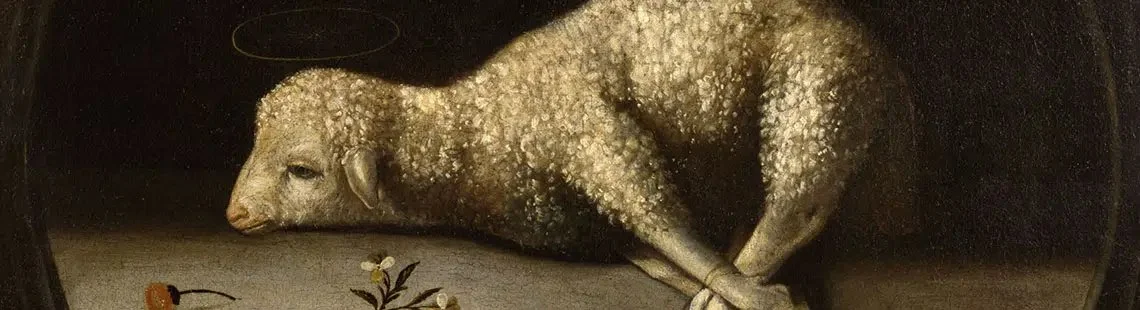
The Myth of Redemptive Violence by Richard Rohr
Leviticus 16 describes the ingenious ritual from which our word “scapegoating” originated. On the Day of Atonement, a priest laid hands on an “escaping” goat, placing all the sins of the Jewish people from the previous year onto the animal. Then the goat was beaten with reeds and thorns and driven out into the desert.

Hopeful Christianity by David Artman
These days if you ask people what Christianity means a lot of them will say something like, "Christians think God is sending everyone but them to hell for ever and ever." Increasingly Christianity is seen as a religion which divides humanity into "keepers" and "expendables". Christianity is seen less and less as being about grace and restoration, and more and more as being about judgment and eternal rejection. Phillip Yancey, in his book Vanishing Grace, writes about this phenomenon. At the beginning of his book Yancey writes:
SUPPORT DAVID ARTMAN’S GOOD WORK

Punisher or Pushover? How is Wrath “God’s” by Brad Jersak
As we continue to preach and teach the NT message that “God is Infinite Love,” embodied in Christ and revealed on the Cross, it is right that we should continually challenge and be challenged by “the wrath of God.” That challenge requires us to keep returning to the Scriptures and to the Lord for greater clarity, because such great potential for error persists. We dare not slander God, either as a violent punisher or a spineless pushover, because such images serve as stumbling blocks, especially to those suffering under the consequences of their poor choices or those of somebody else.
SOURCE: Christianity Without Religion

Buddha at the Gas Pump Interview with Seán ÓLaoire
My guest is Father Seán ÓLaoire. He was born in Ireland and earned a Bachelor of Science degree in Mathematics from the National University of Ireland. He was ordained a Catholic priest in 1972 and spent 14 years working in Kenya. He is multilingual. I think he’d say he speaks about five languages and has an MA and PhD in Transpersonal Psychology. He’s a licensed clinical psychologist in private practice and is the Co-Founder and the Spiritual Director of a nondenominational community called Companions on the Journey, based in Palo Alto, California. He’s the author of five books and co-author of a sixth, and just for kicks, I’ll read the five books: So one is in Swahili, which I’m not going to try to pronounce; that was his first one. Another is Spirits in Spacesuits: A Manual for Everyday Mystics (2003); Souls on Safari (2006), also translated into German; A Sensible God, published in 2008; Why: What Your Life is Telling You About Who You Are and Why You’re Here, published in 2013, and he co-authored that with Matthew McKay and Ralph Metzner; — it’s translated into Korean — and then Setting God Free: Moving Beyond the Caricature We’ve Created in Our Own Image, published in 2021. That’s the one that I just listened to over the past week or two, and I enjoyed it a lot. And that’s probably what we’re mostly going to be talking about today, the topics covered in that book, but I told Seán that he should feel free to bring up anything he’d like to discuss, and we’ll talk about it, and of course, any questions that you all send in, we’ll talk about those, too.
SOURCE: https://batgap.com/sean-olaoire/

"Aging Is Life’s Way of Helping" by Jeannie Zandi
At a public gathering in my town’s plaza, two women pass me. The elder, who seems about 85 to 90, walks slowly, unsteadily, on sensible shoes. One of her slender, thin-skinned legs, bruised and dotted with age spots, is partially covered in knee-high panty hose, while the other is bare, the stocking fallen and gathered around her ankle. Her sparse white hair, somewhat disheveled, is loosely gathered at the back of her neck. Her frail arm stretches out, with her bony hand firmly grasping the arm of the other woman, who I assume is her daughter. The younger woman takes in the scene around her, while making herself wholly available to the older woman, putting aside any agenda she might have for herself. The mother relies utterly on her daughter’s strength, kindness and slowed pace. A tender closeness between them is palpable in the willingness of the daughter and the dependency of the mother as she clings to her daughter’s arm in much the same way the daughter must have clung to hers when she was too young to walk on her own.
BE A SUPPORTER OF MS. ZANDI’S WORK
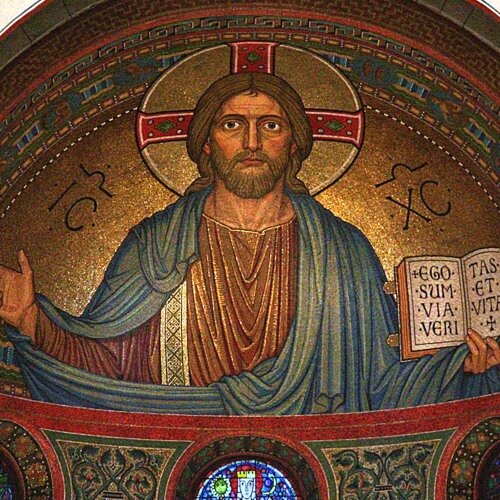
“What, in God’s Name, is Christ Consciousness?” (Part 2) by Seán ÓLaoire
Jesus told many parables whose purpose, I believe, was to help the listeners differentiate between the ego and the soul. For example, he tells of a rich man who, before he went away on a long trip, set a manager in charge of his property and workers. The rich man delayed in coming back, so the manager figured he had gotten lost or had died. So, he began to regard the property and the workers as his own – and started to get drunk and abuse them. How to interpret this? I don’t think that the rich man was God and that the manager represented the typical sinful human, whom God would punish. Rather, I believe, that the rich man represents the soul and the manager represents the ego. Very often, we mistake our egos for our souls and neglect our incarnational missions.
SUPPORT SEAN O’LAOIRE’S GOOD WORK AND PATHEOS.COM

PODCAST: Learning How to See with Brian McLaren — Episode: “Find the Flow” (feat. Jacque Lewis)
What would it mean for us if we happened to live during the decline of the old humanity when a new humanity is in the painful, fragile process of being born? What if some of us are in the process of trying to resuscitate the old, while others of us are conceiving, gestating and giving birth to the new? What if the growth of the new movement, the new humanity, the new social creation or construction depends on the old one losing its hegemony? As I write those words, I can’t help but feel a flood of resonances with the Hebrew scriptures. I feel echoes of Isaiah speaking of God doing a new thing. Something fresh springing forth so that there will be good news for the poor, recovery of sight for the blind, freedom for the incarcerated and oppressed. Oppression of the poor is one of the hallmarks of the old humanity.

“The Nature of Consciousness” - (transcript) by Alan Watts
I find it a little difficult to say what the subject matter of this seminar is going to be, because it's too fundamental to give it a title. I'm going to talk about what there is. Now, the first thing, though, that we have to do is to get our perspectives with some background about the basic ideas that, as Westerners living today in the United States, influence our everyday common sense, our fundamental notions about what life is about. And there are historical origins for this, which influence us more strongly than most people realize. Ideas of the world which are built into the very nature of the language we use, and of our ideas of logic, and of what makes sense altogether.
And these basic ideas I call myth, not using the word 'myth' to mean simply something untrue, but to use the word 'myth' in a more powerful sense. A myth is an image in terms of which we try to make sense of the world. Now, for example, a myth in a way is a metaphor. If you want to explain electricity to someone who doesn't know anything about electricity, you say, well, you talk about an electric current. Now, the word 'current' is borrowed from rivers. It's borrowed from hydraulics, and so you explain electricity in terms of water. Now, electricity is not water, it behaves actually in a different way, but there are some ways in which the behavior of water is like the behavior of electricity, and so you explain it in terms of water. Or if you're an astronomer, and you want to explain to people what you mean by an expanding universe and curved space, you say, 'well, it's as if you have a black balloon, and there are white dots on the black balloon, and those dots represent galaxies, and as you blow the balloon up, uniformly all of them grow farther and farther apart. But you're using an analogy--the universe is not actually a black balloon with white dots on it.
BE A SUPPORTER OF THE ALAN WATTS ORGANIZATION

“From Dysfunction to Resilience: A Good Road to Travel” by Tom Ersin
Growing up with dysfunction can cause lifelong mental health and emotional issues along with physical disorders caused by extreme chronic (long-term) stress. Seek education and support for yourself if you have a family member or other loved one who has exhibited persistent dysfunctional behavior. Whether or not that person wants or gets help, you’ll learn what you can do to help yourself. If you grew up with a parent or guardian who was that member, learn how to break the cycle, get yourself well, and raise children to go out into the world without the emotional baggage you had.

“What is Life? — Philosophical Conversations” - with Ilia Delio
Ilia and Tim discuss the pioneering work of Pierre Teilhard de Chardin, life and death, the power of love and being ‘pilgrims from the future’.
VISIT TIM’S PODCAST: https://podcasts.apple.com/us/podcast/the-freke-show/id1216387576
VISIT ILIA DELIO’S WEBSITE: https://christogenesis.org
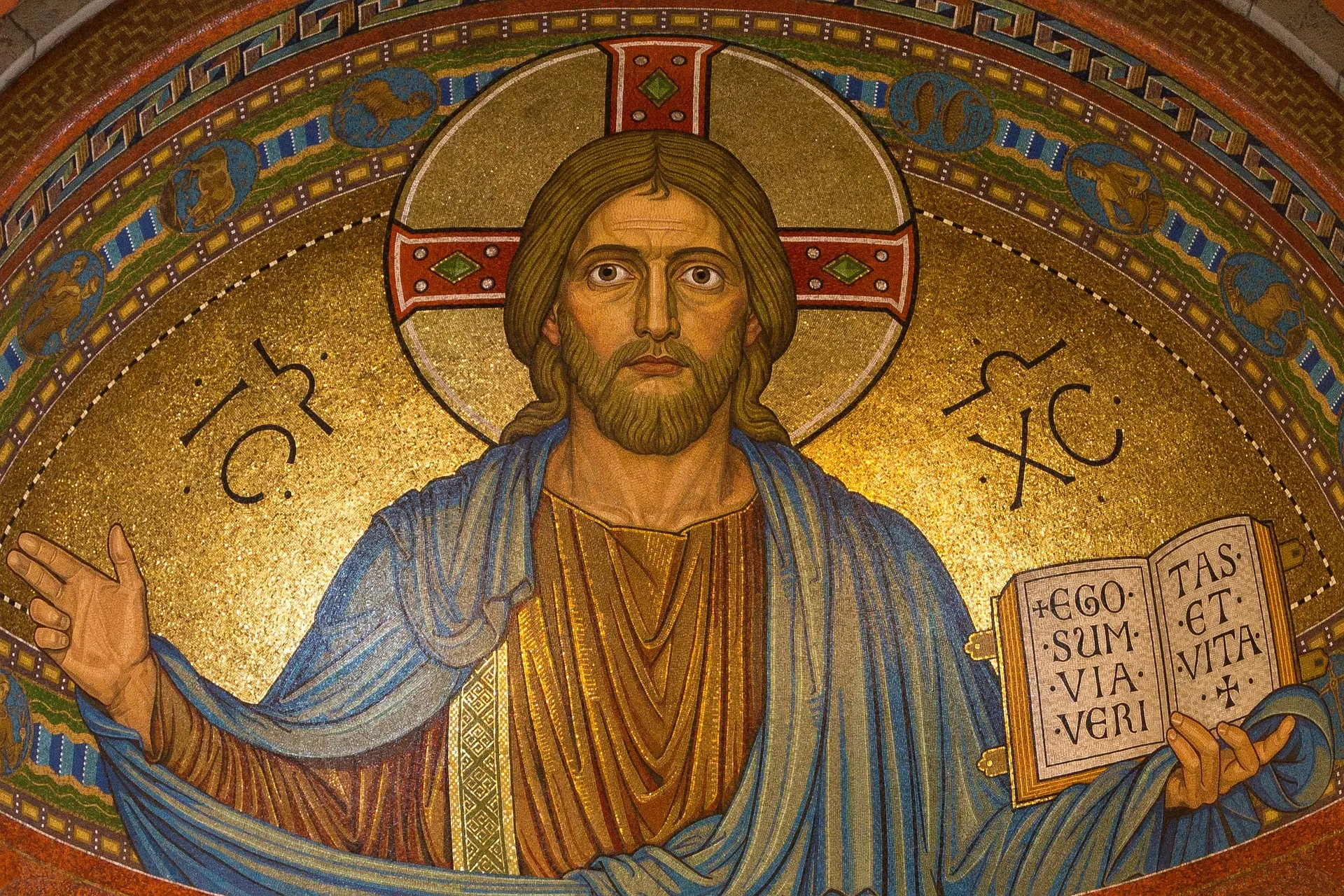
Transfiguration – Then and Now by Fr. Sean O'Laoire
A. The Real Meaning of Thabor
The purpose of the gospels in writing of the transfiguration was to show that Jesus was the fulfillment of the Jewish Scriptures. Traditionally, these scriptures were divided into three sections – the acronym ‘TaNaKh’ was used to represent them. “T” stood for Torah, the first five books of the bible, ascribed to Moses and known as “The Law.” “N” stood for Nebiim or “the prophetic books.” And “K” stood for Ketuviim or “writings” (the wisdom literature – psalms, Job, Ruth etc.) The Pharisees accepted all three parts as inspired, but the priestly caste, the Sadducees, only accepted Torah and Nebiim. Moses was the archetype of Torah; and Elijah stood for the prophets. So, the evangelists wanted to show that Jesus’ encounter with Moses and Elijah was the fulfillment of both streams of revelation. Moreover, God had traditionally appeared on mountain tops – Sinai in the case of Moses and Horeb in the case of Elijah (some scholars claim Sinai and Horeb were the same mountain), so the evangelists situate this event on Mount Thabor. In the transfiguration scene also, God appears and singles out Jesus as “my beloved son in whom I am well pleased.” So, whatever else is true, this was a literary device to make a strong case for the new covenant – the Jesus movement.

“Walking Meditation” by Thich Nhat Hanh
The practice of mindful walking, says Thich Nhat Hanh, is a profound and pleasurable way to deepen our connection with our body and the earth. We breathe, take a mindful step, and come back to our true home. Read on and learn how to.

“The Loss of the World Soul and its Return” by Anne Baring
You could not discover the boundaries of the soul,
even if you travelled by every path in order to do so, so deep a measure does it have.
~Heraclitus
My heart is longing for a lost knowledge, slipped down out of the minds of men.
-from the Sanscrit poem Black Marigolds, Chaura-panchasika, 1st century CE
Once upon a time, in a past so distant that we have no memory of it, the invisible and visible dimensions of life were imagined and instinctively experienced as a sacred unity. In the great civilisations of the Bronze Age (c.3000 bce), particularly those of Egypt, India and China, the whole cosmos was envisioned as a living being and the manifest world was seen as an epiphany or showing forth of an unseen source which breathed it into being, animating and sustaining it: the air itself was experienced as the invisible presence of that world – an “awesome mystery joining the human and extrahuman worlds.”(1)

“Love In Disguise” by TiberJudy
There’s an old story that’s told about a king who lived in a far-off, distant land. He had a rich kingdom, with all his needs and most of his desires met everyday by the royal court that served him. He was loved and respected by his family and noblemen and was known throughout the land for his wisdom and fairness. It seemed the king had everything he could have ever wanted. Except for one very important thing: he had no heir