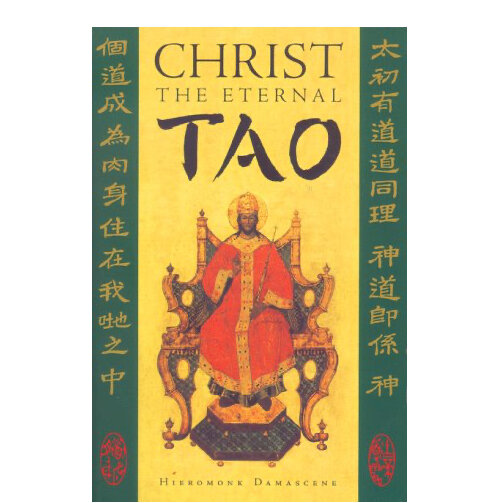
“Christ The Eternal Tao” - (excerpt) by Hieromonk Damascene
In modern Western society, many people turn away from the Christianity of their formative years because they find its truths smothered under an unreal kind of religiosity. They see that the people in the churches are not changing and becoming better, but rather are comforting themselves and each other la their unregenerate state. They find that the Spirit of the Western churches is, at its Core, little different from that of the world around them. Having removed from Christianity the Cross of inward purification, these churches have replaced a direct, intuitive apprehension of Reality and a true experience of God with intellectualism on the one hand and emotionalism on the other.
PURCHASE: “Christ The Eternal Tao”

“An Integral Catholic Leader: Father Anthony de Mello, SJ” by Giorgio Piacenza Cabrer
Father Anthony de Mello SJ is considered one of the foremost mystical theologians of the late Twentieth Century. His simple and direct approach to life continues to untie all kinds of blockages preventing man’s acceptance of his spiritual nature, even decades after his unexpected death. De Mello’s radiated authenticity, love for all and his characteristic laughter tended to disarm any negative preconceived notions against his ideas. As far as my research goes, I’d say that most of those that knew him personally can attest to his sincere and friendly attitude to all as people from every religious persuasion felt comfortable and at soulfully at home near him.
READ MORE OF MR. PIACENZA’S ESSAYS

"The Way of the Heart" by Cynthia Bourgeault
From the Christian esoteric tradition, a path beyond the mind
Put the mind in the heart…. Put the mind in the heart…. Stand before the Lord with the mind in the heart.” From page after page in the Philokalia, that hallowed collection of spiritual writings from the Christian East, this same refrain emerges. It is striking in both its insistence and its specificity. Whatever that exalted level of spiritual attainment is conceived to be—whether you call it “salvation,” “enlightenment,” “contemplation,” or “divine union”—this is the inner configuration in which it is found. This and no other.
BE A SUPPORTER OF MS. BOURGEAULT’S WORK

5 Steps to Develop Self-Compassion & Overcome Your Inner Critic by Birgit Ohlin, MA, BBA
If you were to go on a journey with someone for several decades, how important would the relationship between the two of you be?
Wouldn’t you make an effort to ensure you got along well? Wouldn’t you want to make sure the relationship between the two of you was positive and supportive?
The journey of life, the one we’re all on right now, isn’t so different from that hypothetical journey. Except rather than spending time with another person, our constant companion is the voice inside our heads. But for many of us, the relationship between ourselves and that voice isn’t so positive.
Be a supporter of PositivePsychology.com

The Wisdom of the Zen Masters (excerpt) by Irmgard Schloegl
When the succession after the Fifth Patriarch was under consideration, his main disciple Jinshu was generally expected to be the heir. To present his insight, he composed a verse:
The body is the Tree of Awakening,
The heart is a bright mirror;
Carefully wipe it always So that no dust can settle.
Eno (Hui Neng), who in fact became the Sixth Patriarch, countered with another verse:
There is no Tree of Awakening;
The bright mirror has no stand;
When all is emptiness Where can dust settle?
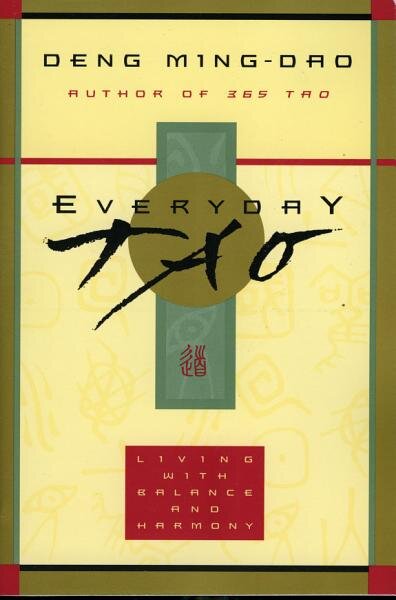
“Introduction” (from EVERYDAY TAO by Deng Ming Dao
Following Tao means following a living path. It is a way of life that sustains you, guides you, and leads you to innumerable rich experiences. It is a spiritual path of joy and insight, freedom and profundity.
Tao is everywhere. It is literally the movement of all life. It is endless and flows in all directions. Since Tao is the total ongoing process of the universe, it makes sense to go along with it. If we swim in a river, we should make use of its current.
SUPPORT ALL OF DENG MING DAO’S FINE WORK

"There Are No Repetitions" (excerpt) SUBTLE SOUND The Zen Teaching of Maurine Stuart) by Maurine Stuart
What is the condition of our minds right now? How are our hearts? This moment is all we have—so at this moment, how creative are we, how in touch with the source are we?
We need courage to be creative. To be sensitive and aware requires great courage. This word “courage” comes from the same root as the French word “coeur,” which means heart. So please have the courage to listen to your heart, to your body, your hara, not just to your head. You will discover new ways to experience your life.

"In Order to Discover God "(excerpt) DEMOCRACY IN THE KINGDOM by Alan Watts
In order to discover God you have to stop clinging entirely. Why does one cling to God? For safety, of course. You want to save something; you want to save yourself. I don’t care what you mean by saved, whether it means just feeling happy, or that life is meaningful, or that there is somebody up there who cares. If you do not cling to one god, you cling to another: the state, money, sex, yourself, power. These are all false gods. But there has to come a time when clinging stops; only then does the time of faith begin. People who hold on to God do not have any faith at all, because real faith lies in not holding on to anything.
SUPPORT THE ALAN WATTS PROJECT

"Psychological Self vs. No-Self” by Ron Crouch
As a therapist and a meditation teacher, I live a surreal life. At the office I’m helping people to gain greater self-esteem, more positive self-regard, and encouraging them to see themselves as competent, empowered and strong. But when I teach meditation I strongly encourage people to see that the self is an illusion. On the outside it could seem as if I’m working against myself.

"The Art of Listening" from 'Power of Now' (and Commentary)
When listening to another person, don't just listen with your mind, listen with your whole body. Feel the energy field of your inner body as you listen. That takes attention away from thinking and creates a still space that enables you to truly listen without the mind interfering. You are giving the other person space — space to be. It is the most precious gift you can give. Most people don't know how to listen because the major part of their attention is taken up by thinking.

“Of Butterflies and Egos” (chapter from "30 Days of Tao") by William Martin
My needs are real,
as are my sorrows.
My opinions count,
as do my actions.
I’m the star of this production
so listen to me
and take me seriously!
When I’m gone the loss will be
horrendous for I am the
irreplaceable,
indispensable,
irretrievable,
Me!

“Spiritual Materialism” (excerpt from) CUTTING THROUGH SPIRITUAL MATERIALISM by Chogyam Trungpa
WE HAVE COME here to learn about spirituality. I trust the genuine quality of this search, but we must question its nature. The problem is that ego can convert anything to its own use, even spirituality. Ego is constantly attempting to acquire and apply the teachings of spirituality for its own benefit. The teachings are treated as an external thing, external to “me,” a philosophy which we try to imitate. We do not actually want to identify with or become the teachings. So if our teacher speaks of renunciation of ego, we attempt to mimic renunciation of ego. We go through the motions, make the appropriate gestures, but we really do not want to sacrifice any part of our way of life. We become skillful actors, and while playing deaf and dumb to the real meaning of the teachings, we find some comfort in pretending to follow the path.
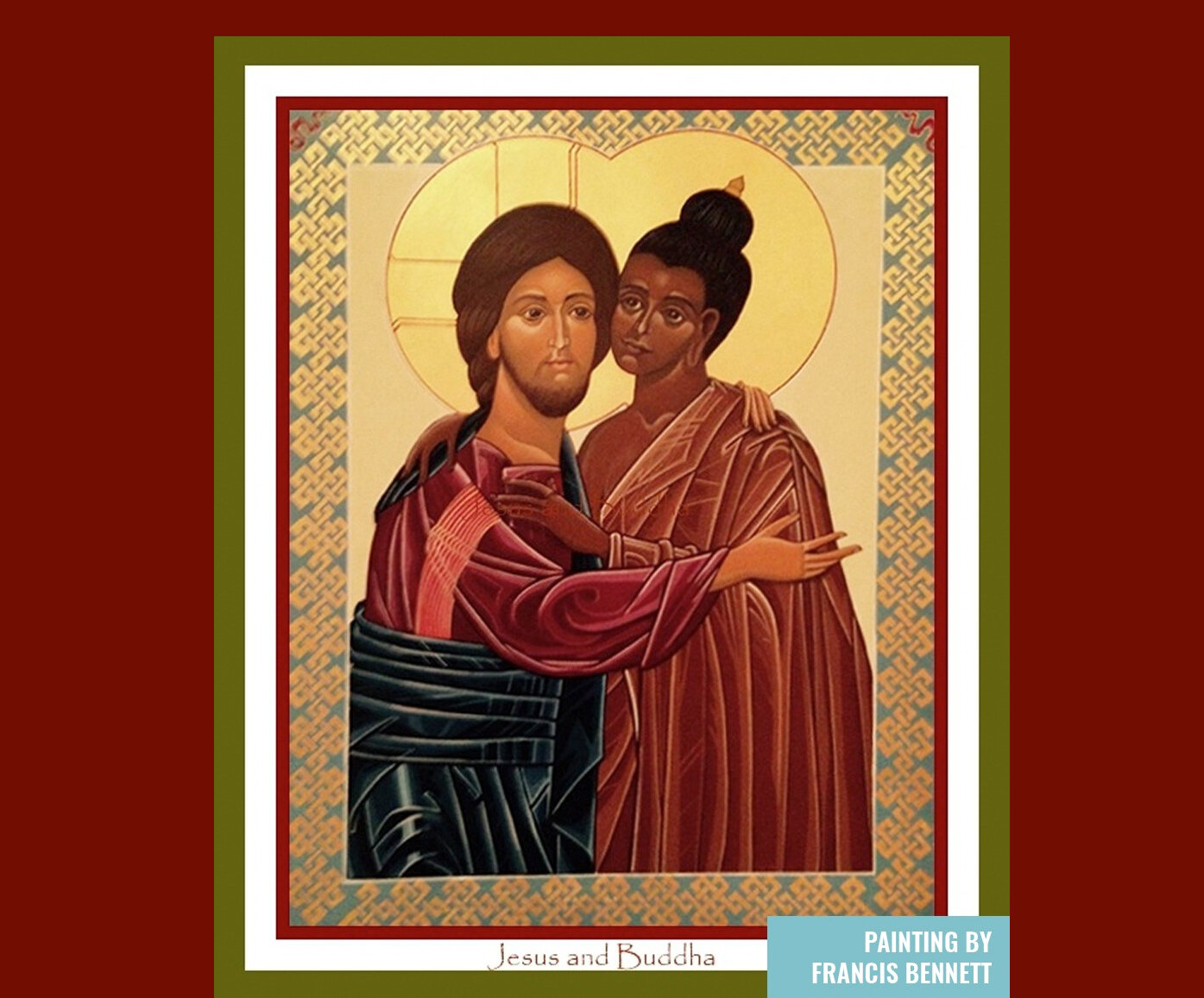
“Wouldn’t It Be Nice if Christians Became Taoists?" Hope for the Emerging Christian Church" By Bruce Epperly and Jay McDaniel
The emerging church in the West – the church of spiritual seekers who seek to share in the journey of Jesus but not impose it on others -- is already Taoist in tone. What remains is for participants in this new and emerging church to turn eastward, learning from Asian Christians and the cultural traditions they bring with them, and thus learning to gentle their enthusiasm with the humility of stardust. What remains is for them to realize that one of the best ways to “proclaim the gospel” is not to proclaim at all, but rather to travel a path of gentleness, which is its own proclamation, its own good news.
BE SUPPORTERS OF BRUCE EPPERLY AND JAY MCDANIEL’S WORK

"The Question of Being" by Adyashanti
Above the entrance to the Oracle at Delphi were written the words, “Know Thyself.” Jesus came along and added a sense of urgency and consequence to the ancient idea when he said, “If you bring forth what is within you, what you bring forth will save you. If you do not bring forth what is within you, what you do not bring forth will destroy you.”
SUPPORT ADYA’S FINE WORK

“Opening the Door of Your Heart" (excerpt from) WHO ORDERED THE TRUCKLOAD OF DUNG? by Ajahn Brahm
SEVERAL CENTURIES AGO, seven monks were in a cave in a jungle somewhere in Asia, meditating on the type of unconditional love I described in the previous story. There was the head monk, his brother, and his best friend. The fourth was the head monk’s enemy: they just could not get along. The fifth monk in the group was a very old monk, so advanced in years that he was expected to die at any time. The sixth monk was sick—so ill in fact that he too could die at any time. And the last monk, the seventh, was the useless monk. He always snored when he was supposed to be meditating; he couldn’t remember his chanting, and if he did he would chant off-key He couldn’t even keep his robes on properly. But the others tolerated him and thanked him for teaching them patience.
BE A SUPPORTER OF AJAHN BRAHM’S WORK

"God" (excerpt) The Essence of Alan Watts by Alan Watts
Modern Protestant theologians, and even some Catholics, have been talking recently about the death of God and about the possibility of a religionless religion, a religion which does not involve belief in God. What would become of the Gospel of Jesus Christ if it were shown that Jesus' own belief in God was unnecessary and invalid? What would remain of his teachings? Of his ideas about caring for other human beings, about social responsibility and so on. I think that would be a pretty wishy-washy kind of religion. If you're going to say that this life is fundamentally nothing but a pilgrimage from the maternity ward to the crematorium and that's it, baby, you've had it, I think that indicates a singular lack of imagination. I would like to look at the death-of-God theology in an entirely different way. What is dead is not God but an idea of God, a particular conception of God that has died in the sense of becoming implausible. And I find this a very good thing.
SUPPORT THE ALAN WATTS PROJECT

"Tolle on Religion" - REVISITED (excerpt) A New Earth
The greatest achievement of humanity is not its works of art, science, or technology, but the recognition of its own dysfunction, its own madness. In the distant past, this recognition already came to a few individuals. A man called Gautama Siddhartha, who lived 2,600 years ago in India, was perhaps the first who saw it with absolute clarity. Later, the title Buddha was conferred upon him. Buddha means "the awakened one." At about the same time, another of humanity's early awakened teachers emerged in China. His name was Lao Tzu. He left a record of his teaching in the form of one of the most profound spiritual books ever written, the Tao Te Ching.

"The Last Word" (excerpt) SUBTLE SOUND THE ZEN TEACHINGS OF MAURINE STUART
There is nothing that is not sacred; nothing that is not spiritual practice. Hakuin, that wonderful eighteenth-century Zen master who restored the vitality of Zen in Japan, warned against the belief that Zen requires the forceful rejection of all worldly concerns. True Zen practice is carried on in the midst of activity. When we are cooking, we are in deep cooking samadhi (where the logical and analytical ability of the being becomes silent). When we are cleaning, we are in deep cleaning samadhi. This condition, samadhi, is not a vacancy, a stupor, a spaced-out state of mind. It is a deeply awake, alert, vividly present condition—and of course, it may be blissful. We may be so vividly awake we can hear the ash from the incense fall.

"We Live in a Dual World" (excerpt) THE WISDOM OF THE ZEN MASTERS - by Irmgard Schloegl
We live in a dual world of night and day, of darkness and light, of joy and sorrow. We are part of this world. Both aspects are there. If we want light and joy only and reject the other half, we shall begin to feel that a vital part of life is missing. But since only a masochist enjoys suffering, it is a razor-edge line on which to hold the balance.

"AWARENESS" (excerpt) Anthony de Mello Spirituality Conference in His Own Words — ANTHONY DE MELLO, S.J.
Is psychology more practical than spirituality? Nothing is more practical than spirituality. What can the poor psychologist do? He can only relieve the pressure. I’m a psychologist myself, and I practice psychotherapy, and I have this great conflict within me when I have to choose sometimes between psychology and spirituality. I wonder if that makes sense to anybody here. It didn’t make sense to me for many years.
SUPPORT ALL OF FR. DE MELLO’S WORK