

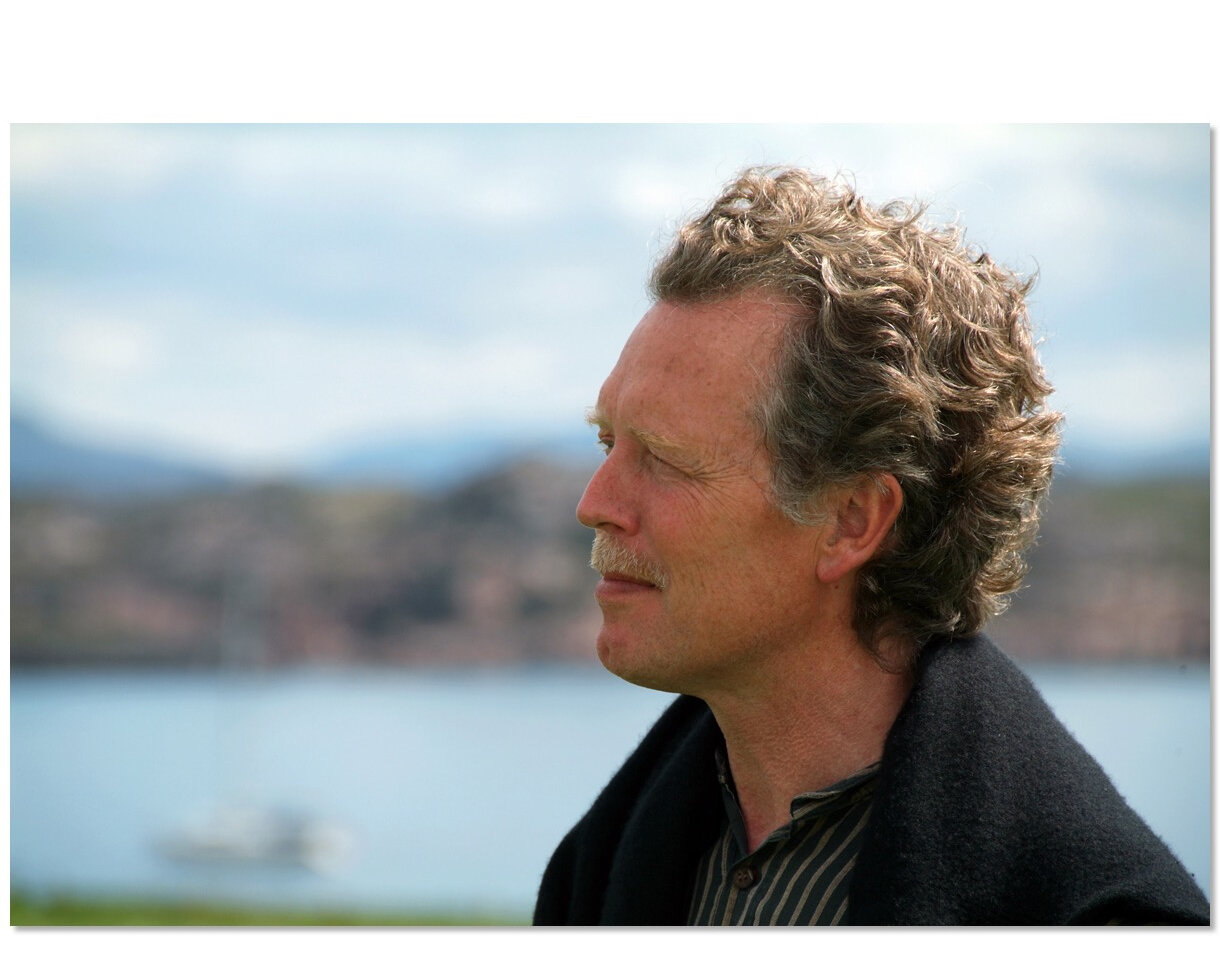
"LISTENING: Two Ways Of Listening: John and Peter" by J. Philip Newell
The stream of Celtic spirituality, from Pelagius in the fourth century to George MacLeod in the twentieth, is characterized by the expectation of finding God within, of hearing the living voice of God speaking from the very heart of life, within creation and within ourselves. It is a spirituality that recognizes the authority of Saint John and reflects his way of looking and listening for God. At the decisive Synod of Whitby in 664, where two distinct ways of seeing, represented by the Celtic and Roman missions, came into conflict, the former allied itself to John. Coleman of Lindisfarne argued that the Celtic tradition originated from Saint John, the disciple who was, he said, “especially loved by our Lord.” Wilfrid, on the other hand, argued for the Roman mission, which, he claimed, was based on the authority of Saint Peter, whom he called “the most blessed Prince of the Apostles.” The tragic outcome of the synod was not that it chose the Roman mission but that it neither made room within the church for both ways of seeing or declared that both were firmly rooted in the gospel tradition.
BE A SUPPORTER OF MR. NEWELL’S WORK

"The Sacred Feminine Today" by Llewellyn Vaughan-Lee
Today there is a resurgence of interest in the sacred feminine. The immense popularity a few years ago of Dan Brown’s The Da Vinci Code spoke not just to our enjoyment of a good thriller but also to the mystery of the divine feminine in Western culture, which is the real thread of the book’s chase, from the enigmatic smile of the Mona Lisa to the search for the grail and the heritage of Mary Magdalene. We know now how the feminine mysteries were present in Greek culture and myth, as imaged in the story of Persephone, and enacted for more than 2,000 years in the initiations at Eleusis. In the early Christianity women had spiritual equality, and the significance of Mary Magdalene, the disciple whom Jesus loved more than others, being the first to see the risen Christ, points to the esoteric significance of the feminine. We have also learned how the power of the sacred feminine was repressed by the Church fathers, and Mary Magdalene purposely misidentified as a prostitute.
SOURCE: PLEASE SUPPORT THE HUFFINGTON POST
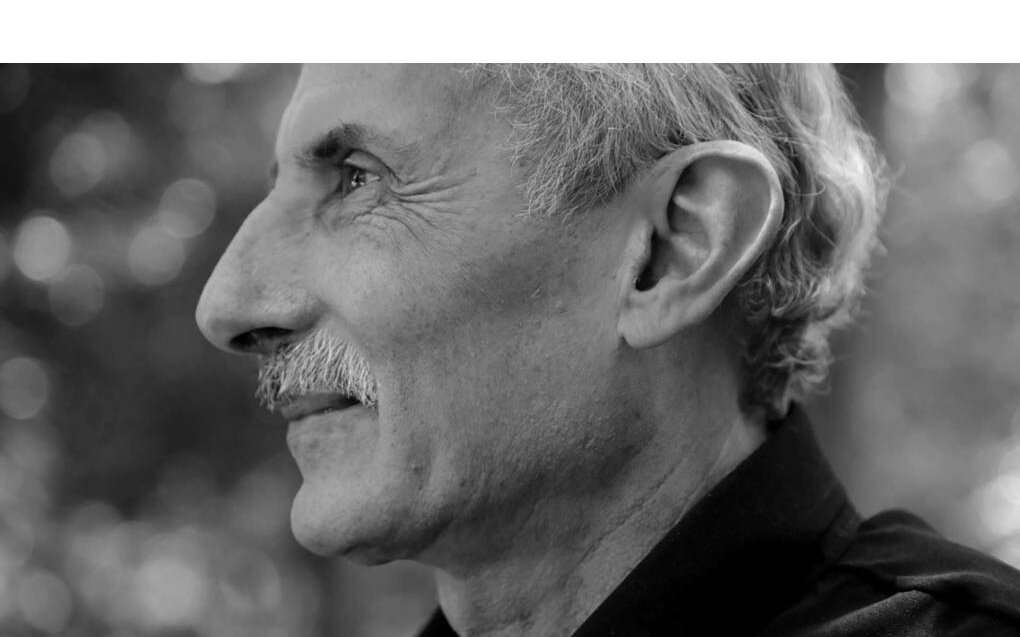
"Bringing Home the Dharma: Awakening Right Where You Are" by Jack Kornfield
RAIN is a useful acronym for the four key principles of mindful transformation of difficulties. RAIN stands for Recognition, Acceptance, Investigation, and Nonidentification. A line from Zen poetry reminds us, “the rain falls equally on all things.” Like the nourishment of outer rain, the inner principles of RAIN can be applied to all our experience, and can transform our difficulties.
BE A SUPPORTER OF MR. KORNFIELD’S WORK
"The Evolution of Consciousness as Recorded in Ancient Times " by JC Tefft
When considering the underlying meaning and message of ancient scripture from the standpoint of evolving Consciousness, biblical stories reveal that the flowering of conscious Awareness amidst the Hebrew tribes was less about a ‘chosen people’ searching for their ‘promised land’ and more about a transformational progression within certain personages in Hebrew society from lower to higher ‘levels’ of conscious Awareness in their lifetime and in generations that followed. First one, then two, then four, and so on down the line, as an ever-growing number began to awaken unto the Light until at one point, in an instant, a sort of ‘grand mal’ awakening occurred in the person of Jesus wherein attachments to mental constructs of Mind collapsed entirely. Two others that we know of, the Buddha in India and Lao Tzu in China, were similarly transformed more than five centuries before.
BE A SUPPORTER OF J.C. TEFFT’S WORK
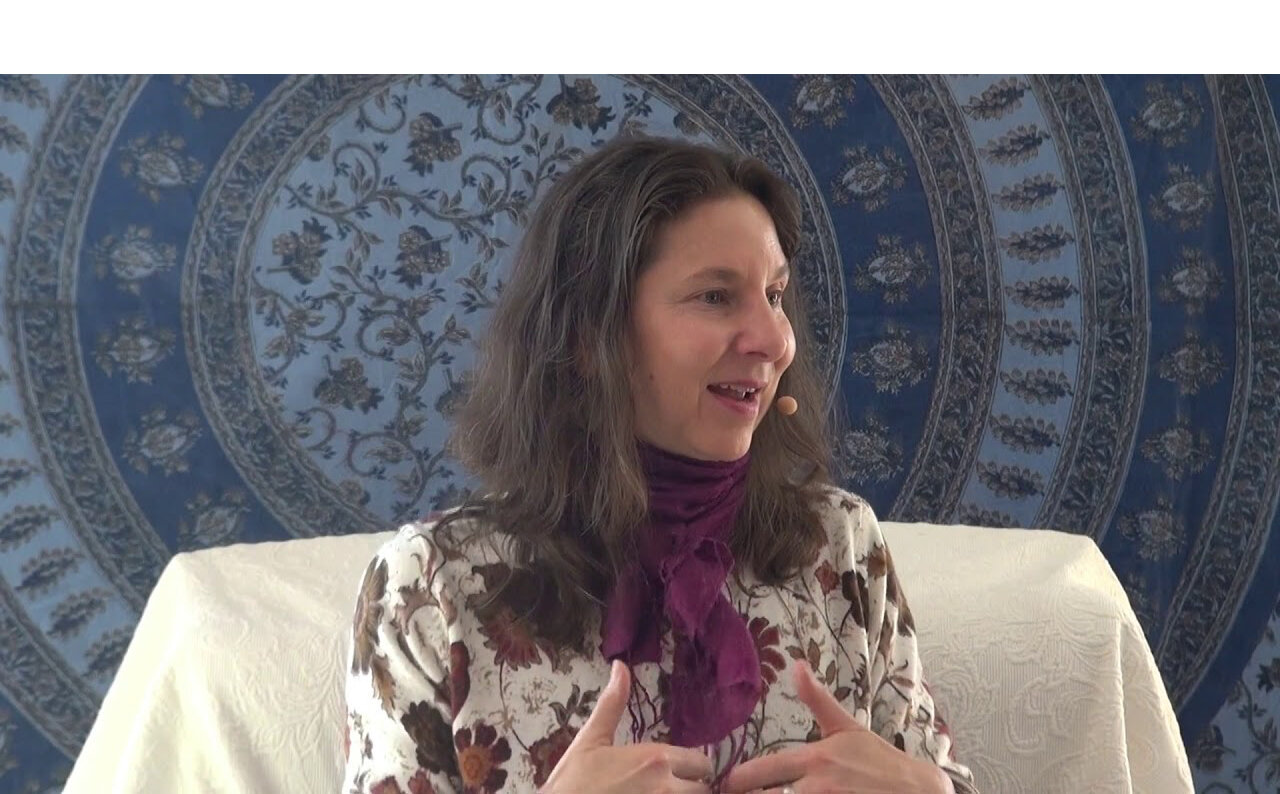
“Why Are Men Like That?" by Jeannie Zandi
I have heard this question asked in many different tones lately, but rarely with curiosity, concern and a sincere desire to understand. As an ally to men since the beginning of the Men's Movement of the late 80s, I would like to share, humbly as a woman, a bit of what I have gleaned over the past thirty years for anyone with a desire to understand those guys -- our brothers, fathers, sons, friends, and lovers, or anyone who grew up with men’s conditioning.
The first phrase I learned to say as a toddler was “Bad boy!” It was my weapon to get my mother’s attention when my older brother was doing something I didn’t like. It was the lens through which my mother, a product of her culture, related to children who had inconvenient feelings or uncooperative or unsavory behavior. From a very early age, I learned to relate to boys as their victim (and sometimes I was!), their boyish energy often seen as inherently oppressive to others. In turn, they learned to see themselves as bad boys and to try very, very hard to be good ones.
BE A SUPPORTER OF JEANNIE’S WORK
"René Girard’s Legacy" by Mark Anspach
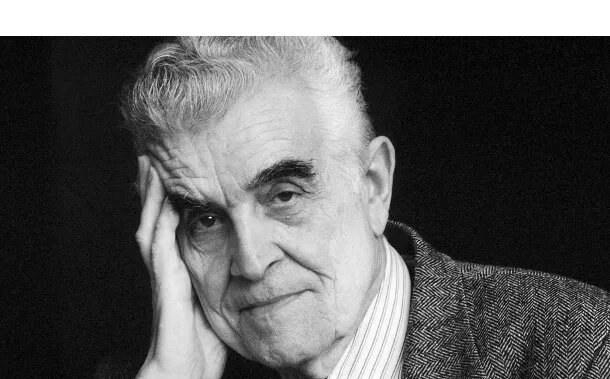
Sometimes the greatest ideas appear to be simple ones. The famed critic and cultural theorist René Girard, who passed away at his Stanford home on November 4, 2015, gave the world a set of deceptively simple ideas that have changed the way we think about desire, violence, religion, and human nature itself.
What do people really want? Why do they fight? What is religion all about? And how did human culture get started in the first place? Girard tackled such bedrock questions head-on, offering boldly original answers expressed in admirably clear language. The last of the Grand Theorists, he was a sophisticated Continental thinker who always kept his feet planted firmly on the ground. His ideas are never purely theoretical. They help make sense of everyday life.
PLEASE SUPPORT the IMITATIO PROJECT
René Girard and Mimetic Theory
René Girard (1923-2015) is recognized worldwide for his theory of human behavior and human culture. In 2005 he was inducted into the Académie française, and in 2008 he received the Modern Language Association's award for Lifetime Scholarly Achievement. He was Professor Emeritus at Stanford University.
PLEASE SUPPORT the IMITATIO PROJECT
"René Girard and Mimetic Theory" by Mark Anspach
René Girard (1923-2015) is recognized worldwide for his theory of human behavior and human culture. In 2005 he was inducted into the Académie française, and in 2008 he received the Modern Language Association's award for Lifetime Scholarly Achievement. He was Professor Emeritus at Stanford University.
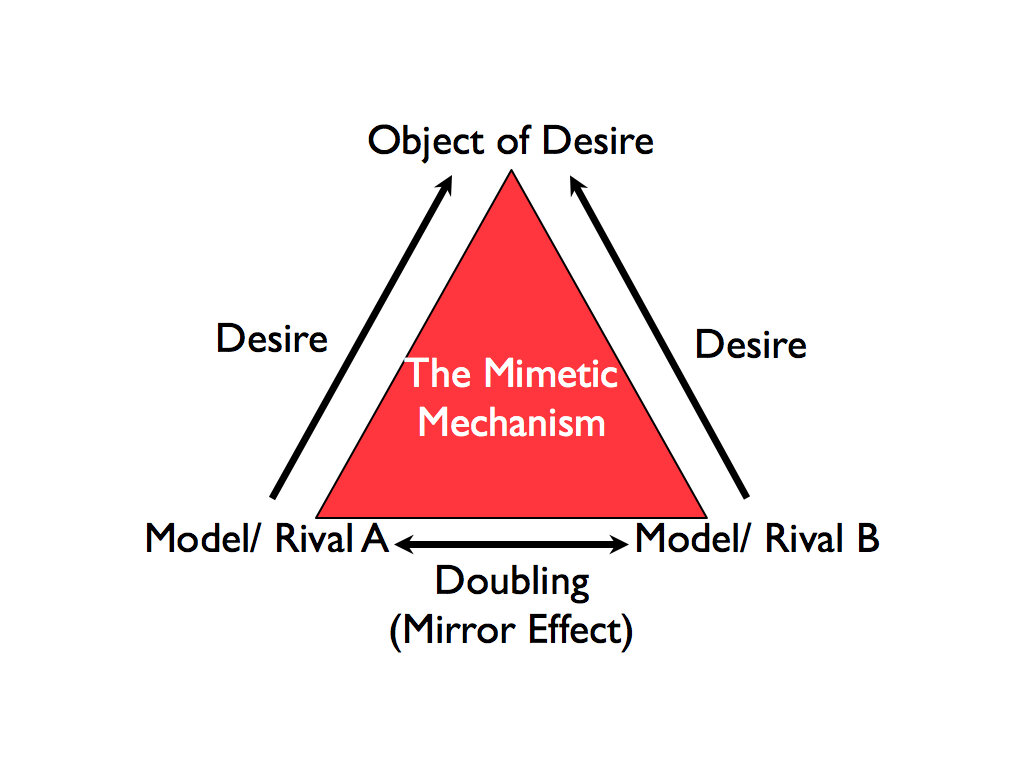
Back more than 50 years ago, René Girard started teaching French literature because he needed a job. He hadn't even read many of the books he was assigned to teach. Then, as he studied the classic novels of Stendhal and Proust with a fresh mind, staying one step ahead of his students, he was struck by a series of similarities from novel to novel. Unbound by any narrow research agenda, Girard discovered a simple but powerful pattern that had eluded sophisticated critics before him: imitation is the fundamental mechanism of human behavior.
PLEASE SUPPORT the IMITATIO PROJECT
"Are You Ready to Lose Your World?"by Adyashanti
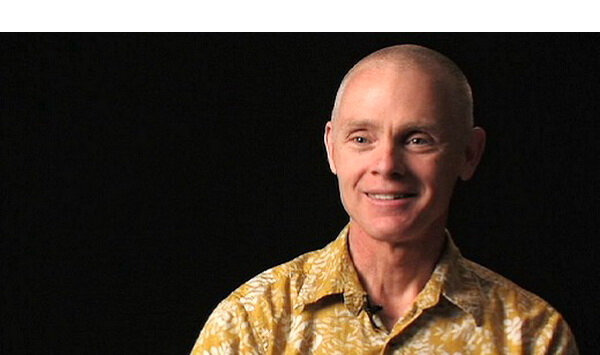
There is a very famous poem written by the third patriarch of Zen, Seng-ts’an, called the Hsin-Hsin Ming, which translates as Verses in Faith Mind. In this poem Seng-ts’an writes these lines: “Do not seek the truth; only cease to cherish opinions.” This is a reversal of the way most people go about trying to realize absolute truth. Most people seek truth, but Seng-ts’an is saying not to seek truth. This sounds very strange indeed. How will you find truth if you don’t seek it? How will you find happiness if you do not seek it? How will you find God if you do not seek God? Everyone seems to be seeking something. In spirituality seeking is highly honored and respected, and here comes Seng-ts’an saying not to seek.
BE A SUPPORTER OF ADYA’S WORK

"The Evolution of Human Consciousness: and why we should be more open about The Bible" by Devon Bailey
It’s impossible to look at the human race and not see an evolution of awareness happening. Each generation brings about new questions about who we are and who we are supposed to be. Often a former way of thinking is challenged by an oppressed group and allies who have seen a different way to be in the world. In America, this is usually marked by marches and protests. Take the Civil Rights Movements of the sixties, the Woman Suffrage movements, and today’s movements for LGBTQ persons.
It also happens with the advent of a new technology. We once thought the earth was flat. We once thought the sky was a glassy firmament with windows that let the sky waters in. But now we have photographs of our round home and we’ve sent men into the sky so that they could walk on the rock that lights up our nights.
BE A SUPPORTER OF DEVON’S WORK

"The Nonduality of the Cross" by Jeff Foster
“Like a bridegroom, Christ went forth from his chamber… He came to the marriage-bed of the cross, and there in mounting it, he consummated his marriage. And when he perceived the sighs of the creature, he lovingly gave himself up to the torment in place of his bride, and joined himself to [her] forever.”– St. Augustine The crucifixion as a celebration of life? As a marriage?
What the hell is going on?
BE A SUPPORTER OF JEFF FOSTER’S WORK

Rob Bell Interviews John Philip Newell
In February, Rob Bell and John Philip Newell got together again for a riveting night of conversation, contemplation, and, when Rob Bell is involved, of course laughter. Recorded live at Largo – a stalwart and intimate music and comedy club in Los Angeles – their conversation was then converted into an episode of Rob Bell’s podcast, The RobCast. When these two teachers get talking, it’s electric. And it doesn’t hurt that they enjoy being together!
This interview uses John Philip’s book Christ of the Celts as an anchoring point, but covers a wide range of topics – original sin, the true meaning of being “born again”, the diaspora of the Christian household, grace, and more. Trust us – you don’t want to miss this stimulating, thought provoking, and at times delightfully glib and cheerful conversation.
BE A SUPPORTER OF BOTH ROB AND JOHN’S WORK

"A Reply To Richard Rohr On The Cosmic Christ" by Ilia Delio
Richard Rohr is one of the great vernacular theologians of our age. He has the gift of taking complex theological ideas and translating the core insights into the language of the people. In doing so, he has helped thousands of people around the globe come to a new appreciation of the mystery of God and the need for renewed spirituality today.
In his newest work, Richard takes up the mystery of the cosmic Christ and, as a Franciscan, does so with passion. The notion that Christ is the firstborn of creation, the head of the whole shebang from the beginning, was supplanted in the early Church by the emphasis on sin and salvation. St. Augustine, in particular, felt the need to formulate a doctrine of original sin in order to highlight the saving grace of God. By the eleventh century, the need to explain the damage due to the sin of Adam and Eve became the principal reason for Jesus Christ. If Adam had not sinned, Christ would not have come. No sin, no Jesus. The reason for the Incarnation (God assuming flesh), therefore, found merit in sinful humanity, rendering generations of people focused on their faults and failings. Salvation through Christ meant being rescued from a fallen world.
BE A SUPPORTER OF ILIA’S WORK

"The Beauty of Beginner’s Mind" by Jack Kornfield
The wisdom of uncertainty frees us from what Buddhist psychology calls the thicket of views and opinions. “Seeing misery in those who cling to views, a wise person should not adopt any of them. A wise person does not by opinions become arrogant. How could anyone bother those who are free, who do not grasp at any views? But those who grasp after views and opinions wander about the world annoying people.” I like to think that the Buddha said this last sentence with a laugh. Ajahn Chah used to shake his head and smile, “You have so many opinions. And you suffer so much from them. Why not let them go?”
BE A SUPPORTER OF MR. KORNFIELD’S WORK

“Life is like a Jigsaw Puzzle” by Father Seán ÓLaoire
…“Life is like a Jigsaw Puzzle”. If you were to scatter all the pieces of a jigsaw puzzle on a table, the first thing you would do is identify the four corner pieces and put those in place. Next you would identify the straight lines and put those in place. Then you have three clues for the rest of the pieces: contours, colors and the picture on the box.
BE A SUPPORTER OF FR. SEAN’S WORK

"The Realization of Beauty" Chapter 7 - Sadhana - A Book on Spirituality by Rabindranath Tagore (PART 7)
The greater part of this world is to us as if it were nothing. But we cannot allow it to remain so, for thus it belittles our own self. The entire world is given to us, and all our powers have their final meaning in the faith that by their help we are to take possession of our patrimony.
But what is the function of our sense of beauty in this process of the extension of our consciousness? Is it there to separate truth into strong lights and shadows, and bring it before us in its uncompromising distinction of beauty and ugliness? If that were so, then we would have had to admit that this sense of beauty creates a dissension in our universe and sets up a wall of hindrance across the highway of communication that leads from everything to all things.
But that cannot be true. As long as our realization is incomplete a division necessarily remains between things known and unknown, pleasant and unpleasant. But in spite of the dictum of some philosophers man does not accept any arbitrary and absolute limit to his knowable world. Every day his science is penetrating into the region formerly marked in his map as unexplored or inexplorable. Our sense of beauty is similarly engaged in ever pushing on its conquests. Truth is everywhere, therefore everything is the object of our knowledge. Beauty is omnipresent, therefore everything is capable of giving us joy.

"The Relation of the Individual to the Universe" - (chapter 1) Sadhana – The Realization of Life - A Book on Spirituality by Rabindranath Tagore PART 1 (of 8 part series)
The civilization of ancient Greece was nurtured within city walls. In fact, all the modern civilizations have their cradles of brick and mortar.
These walls leave their mark deep in the minds of men. They set up a principle of "divide and rule" in our mental outlook, which begets in us a habit of securing all our conquests by fortifying them and separating them from one another. We divide nation and nation, knowledge and knowledge, man and nature. It breeds in us a strong suspicion of whatever is beyond the barriers we have built, and everything has to fight hard for its entrance into our recognition.
When the first Aryan invaders appeared in India it was a vast land of forests, and the new-comers rapidly took advantage of them. These forests afforded them shelter from the fierce heat of the sun and the ravages of tropical storms, pastures for cattle, fuel for sacrificial fire, and materials for building cottages. And the different Aryan clans with their patriarchal heads settled in the different forest tracts which had some special advantage of natural protection, and food and water in plenty.
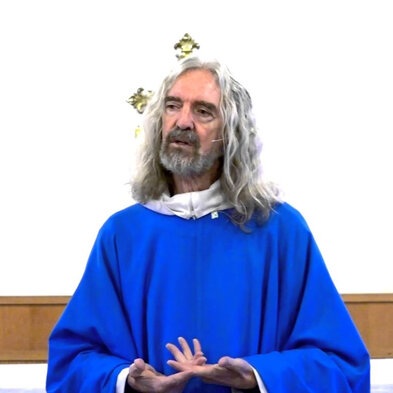
"I am the Way, the Truth and the Life" by Father Seán ÓLaoire
In early 1995, I was invited to give a series of seven lectures at the Presbyterian Church in Palo Alto. I titled the series, “Will the real Jesus please stand up?” During the preparation period for the series, while I was meditating one day, I had a very powerful vision of Jesus. Before the meditation began, I had been reading the famous passage in John’s Gospel where Jesus said, “I am the way, the truth and the life. Nobody comes to the father except through me.” So, now that I had him “in person”, I asked him, “Did you really say that?” He replied, “Yes, I did. Because the only way is love; the deepest truth is love; and the whole point of life is love. Anybody who wants to find the father needs to walk only in love.” And then, without any prompting from me, he went on to say, “And the Buddha is the way, the truth and the life. Nobody comes to the father except through the Buddha. Because the only way is compassion; the deepest truth is compassion; and the whole point of life is compassion. Anybody who wants to find the father needs to walk only in compassion.”
BE A SUPPORTER OF FR. SEAN’S WORK

A Rocking Horse Catholic - comments by Contemplative Catholic — Caryll Houselander
Just read Caryll Houselanders book, "A Rocking horse Catholic." Interesting 20th Catholic 'mystic.' Some parallels with Thomas Merton, especially the following passages . . . . .
"I was in an underground train, a crowded train in which all sorts of people jostled together, sitting and strap-hanging—workers of every description going home at the end of the day. Quite suddenly I saw with my mind, but as vividly as a wonderful picture, Christ in them all. But I saw more than that; not only was Christ in every one of them, living in them, dying in them, rejoicing in them, sorrowing in them—but because He was in them, and because they were here, the whole world was here too, here in this underground train; not only the world as it was at that moment, not only all the people in all the countries of the world, but all those people who had lived in the past, and all those yet to come.
BE A SUPPORTER OF MS. HOUSELANDER’S WORK

"Why is Spiritual Awakening So Painful?" by Nuno Alves, Akashic Records Reader
Spiritual awakening can be painful emotionally, because we shed away many of the constructs, beliefs, patterns - inner and outer - that we had surrounded ourselves with, and accumulated over the course of many lifetimes.
Many of these constructs are not aligned with our true spiritual nature and do us more harm than good. But we were convinced otherwise. We were absolutely positively sure we needed them to survive, to thrive, and to feel good. We identified with them. They deal with anything and everything in our lives, big and small, and are often things we hold very dear.
BE A SUPPORTER OF MR. ALVES’ WORK